August 29, 2026
Canon EOS M6 Buying Guide: Worth It in 2026?
The Canon EOS M6 is a 24MP APS-C mirrorless on a discontinued mount — which is exactly why it is cheap. Here is who should buy one and what to check first.
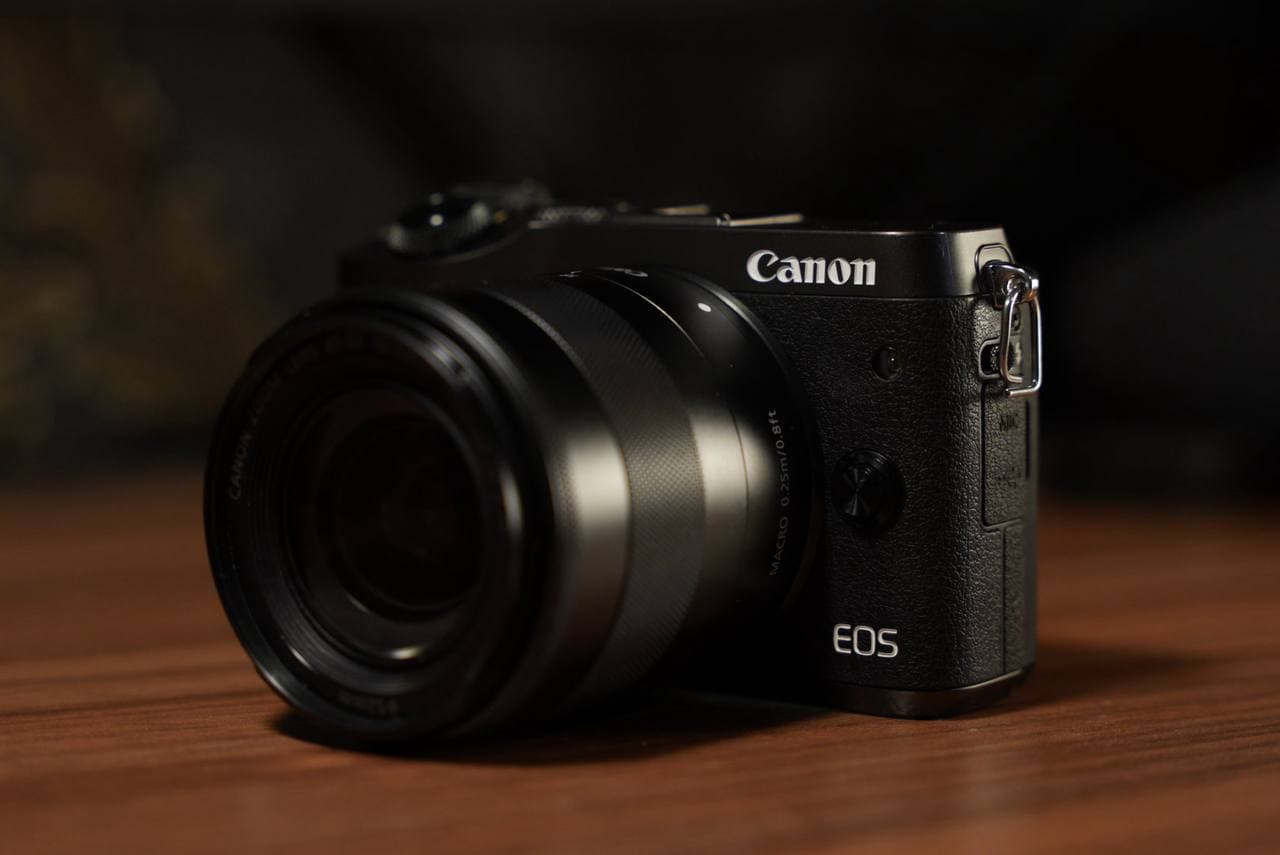
Let us deal with the obvious problem first, because it is the reason anyone hesitates over this camera. Canon has discontinued the EF-M mount. There will be no new EF-M lenses, and the range was never large to begin with — that is settled, and no buying guide can talk around it.
Here is why it may not matter to you. The EOS M6 gives you a 24-megapixel APS-C sensor with Dual Pixel autofocus, in a body small enough to carry every day, at a price that has fallen precisely because of the mount situation. If you buy it with a lens and shoot it as a complete camera rather than the start of a system, a dead mount costs you nothing. You are buying a finished object at a discount.
What the M6 Actually Does Well
When Canon released it, the M6 was the smallest body carrying the company's then-current 24-megapixel APS-C sensor with Dual Pixel CMOS autofocus. That autofocus is the headline. Dual Pixel uses the imaging sensor itself for phase detection across a wide area, and on the M6 it is fast, confident and sticky — it holds focus in live view and in macro work in a way that cameras at this price generally do not.
The second thing is colour. Canon's JPEG rendering is the reason people stay with the brand, and the M6 has it in full. Skin tones come out warm and correct straight from the camera, video looks right without grading, and for a great many people that removes editing from the process entirely.
The third is the interface. The touchscreen and the physical controls on this body are genuinely pleasant — a real exposure compensation dial, a tilting touch screen, and a menu system that does not fight you.
Where It Falls Short
Video tops out at 1080p. There is no 4K, and if 4K is a requirement then this is simply the wrong camera and nothing else about it will compensate.
Continuous shooting is the other weak spot. Under sustained bursts the camera can lock up briefly and the live view lags, which makes it frustrating for sports or fast-moving children. It is a camera for considered shooting, not for chasing action.
There is also no built-in viewfinder. Canon sold a clip-on electronic viewfinder that mounts in the hot shoe, so the capability exists, but it is an accessory rather than part of the body — worth knowing before you buy if you dislike composing on a screen in bright sun.
Who Should Buy One
Buy the M6 if you want a genuine step up from a phone or a compact, in a bag you will actually carry, and you are happy to own one or two lenses rather than build a collection. It is an excellent travel camera and an excellent family camera.
Buy it also if you already have Canon EF or EF-S lenses in a drawer from a DSLR. Canon's EF-EOS M adapter mounts them with full autofocus, and that instantly turns the limited native lens range into a very large one. This is the single best reason to choose an M6 over a rival body.
Do not buy it if you want a system to grow into over the next decade. Canon's RF-S line is where new APS-C development is happening.
What to Check When Buying Used
Start with the sensor. Remove the lens and look across the sensor at an angle in good light. Dust is expected and cleans off. Scratches on the sensor's front glass are permanent and will appear on every frame at small apertures — walk away from those.
Test the Dual Pixel autofocus properly, because it is the main thing you are paying for. Point the camera at something with clear edges at close range, then something distant, and watch how quickly and decisively it moves between them. Turn on face detection and check that it finds and holds a face without hunting.
Work the tilting screen through its full range, including flipped up for selfies, and watch for flicker or lines while you flex the hinge. That ribbon cable is the standard failure point on tilting-screen bodies.
Check the lens mount for play by gently twisting a mounted lens — there should be no wobble — and inspect the electronic contacts on both mount and lens for corrosion or wear.
Run through the menus and confirm the camera writes to and reads from an SD card. Check the hot shoe contacts if you plan to use the external viewfinder or a flash.
Finally, ask about battery health. The M6 uses the LP-E17, a small battery with modest life even when new, and a worn one will cut your shooting day short. Budget for a spare regardless of what you are told.
Our M6 comes with the EF-M 18-55mm kit lens, which is a genuinely capable everyday zoom and the right starting point for this body. Every camera at Silver Cam is checked for sensor condition, autofocus response, screen hinge and battery health before listing, and we buy and take trade-ins on mirrorless bodies as well as vintage gear.