September 15, 2026
Nikon Coolpix P100 Review: A 26x Bridge Camera Today
The Nikon Coolpix P100 pairs a 26x zoom with 10fps bursts and a BSI sensor. Where this 2010 bridge camera still earns its place, and its real weaknesses.
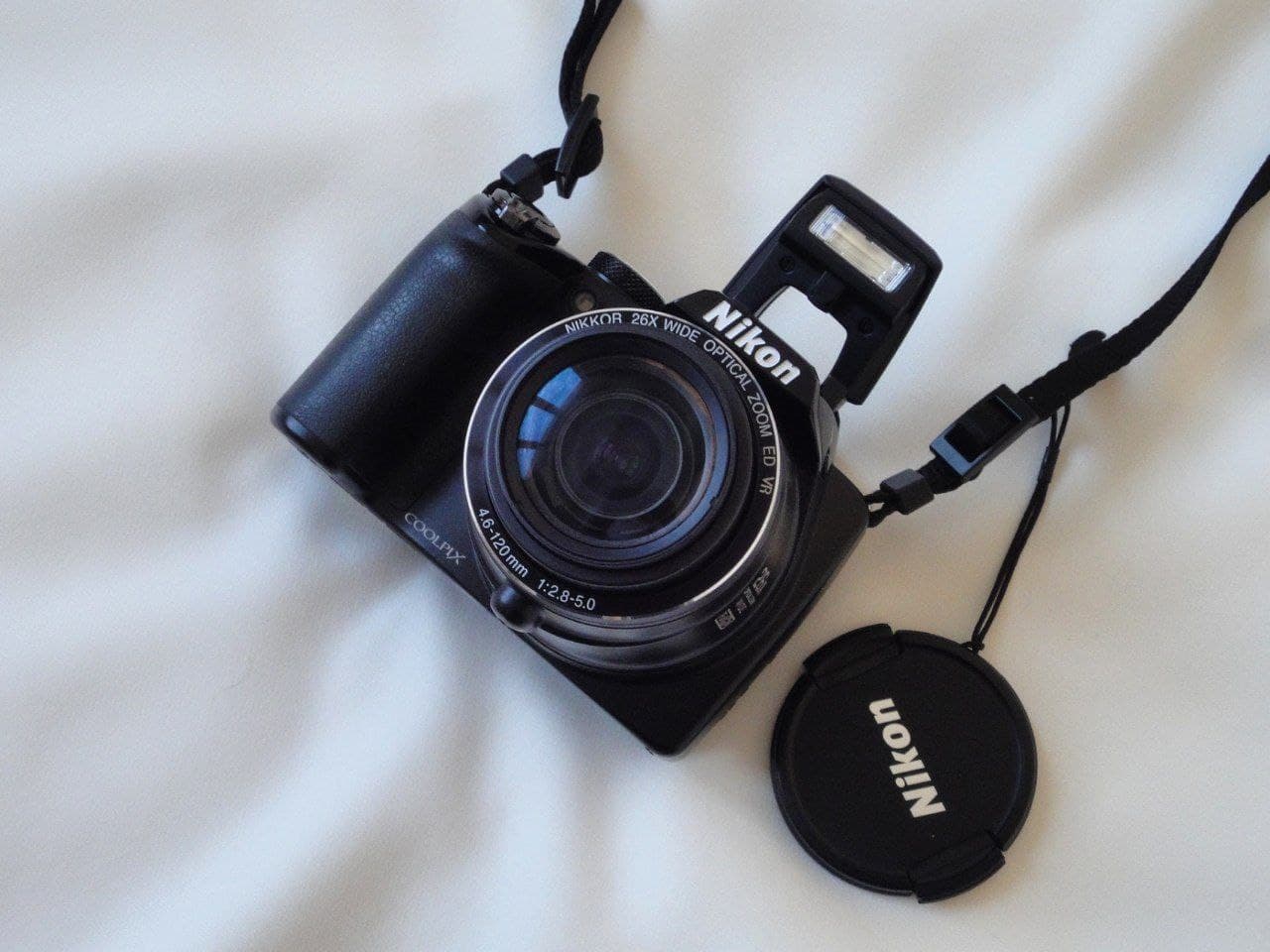
The Nikon Coolpix P100 was built for one kind of photograph: something moving, some distance away. It combines a 26x zoom reaching 678mm equivalent with a burst mode firing 10 frames per second at full resolution, and in 2010 that was an unusual pairing at this price.
Buy the P100 if you want to photograph birds, children on a sports field, or anything else that will not stand still, and you would rather carry one camera than a body and a long lens. Skip it if you mostly shoot indoors, or if you want to walk around all day without thinking about the battery.
The Zoom and the Speed
The lens covers 26mm to 678mm. At the wide end that is a properly wide view for landscapes and rooms; at the long end it brings distant subjects close enough to fill the frame. Optical stabilisation is essential at those focal lengths, and the P100 has it.
The 10 frames per second burst is what separates it from most bridge cameras of its generation. It lets you fire a short sequence as a bird takes off or a player shoots, then keep the one frame where everything lines up. Behind it is a 10.3-megapixel backside-illuminated CMOS sensor, which Nikon chose specifically to reduce noise at higher sensitivities — exactly what you need when a fast shutter speed is keeping the action sharp.
The Screen and the Viewfinder
The P100 has a 3-inch, 460,000-dot screen that tilts, which makes shooting over a crowd or down low at wildlife far easier. It also has an electronic viewfinder, switched on with a button beside it. Reviewers found the viewfinder serviceable rather than impressive — small and not especially sharp — but at 678mm, holding the camera against your eye steadies it in a way no screen held at arm's length can.
Video is full HD 1080i with stereo sound. There is also a 240 frames per second slow-motion mode, best treated as a curiosity: the resolution is low and the footage soft.
The Weaknesses You Will Notice
Battery life is the big one. The EN-EL5 battery is rated for roughly 250 shots, which a day of burst shooting gets through quickly. It is also charged inside the camera, so you cannot charge a spare while you keep shooting. If you buy a P100, buy a second battery and an external charger with it.
Start-up is slow. The camera can take two seconds or more before it is ready, so switch it on before the moment arrives rather than when it does.
And this is still a small-sensor camera. In good light the files are fine; in poor light, even with the backside-illuminated sensor, noise and softness arrive quickly.
Inspecting a Used P100
Run the zoom through its full range several times. A 26x lens has a long, complex barrel, and grinding, hesitation or a Lens Error message are all reasons to walk away.
Zoom to 678mm, frame something distant and half-press the shutter. The image should visibly settle as the stabiliser engages. If it does not, the camera will be very hard to use at the long end.
Tilt the screen through its full range with the camera switched on and watch for flicker, which points to a worn ribbon cable in the hinge. Switch to the viewfinder and check that it is clear and free of dark patches.
Test the burst mode. Hold the shutter down in good light and confirm the camera fires a rapid sequence and writes it to the card without freezing.
Ask about the battery's age, and charge it before testing if you can — a worn EN-EL5 makes a healthy camera look faulty. Because the battery charges in the body, confirm the camera actually accepts a charge.
Stock changes often at Silver Cam, so check the shop for whether a P100 is available right now. Every bridge camera we list is tested at both ends of the zoom, with stabiliser, screen hinge, viewfinder and battery checked, and we repair stuck and grinding zoom lenses on cameras like this one. We also buy bridge cameras you no longer use.