September 15, 2026
Panasonic Lumix FH2: A Leica-Branded Lens for Less
The Panasonic Lumix FH2 is a slim 2011 14MP CCD compact with a Leica-branded 28mm 4x zoom and 720p video. What it does well, its limits and what to check.
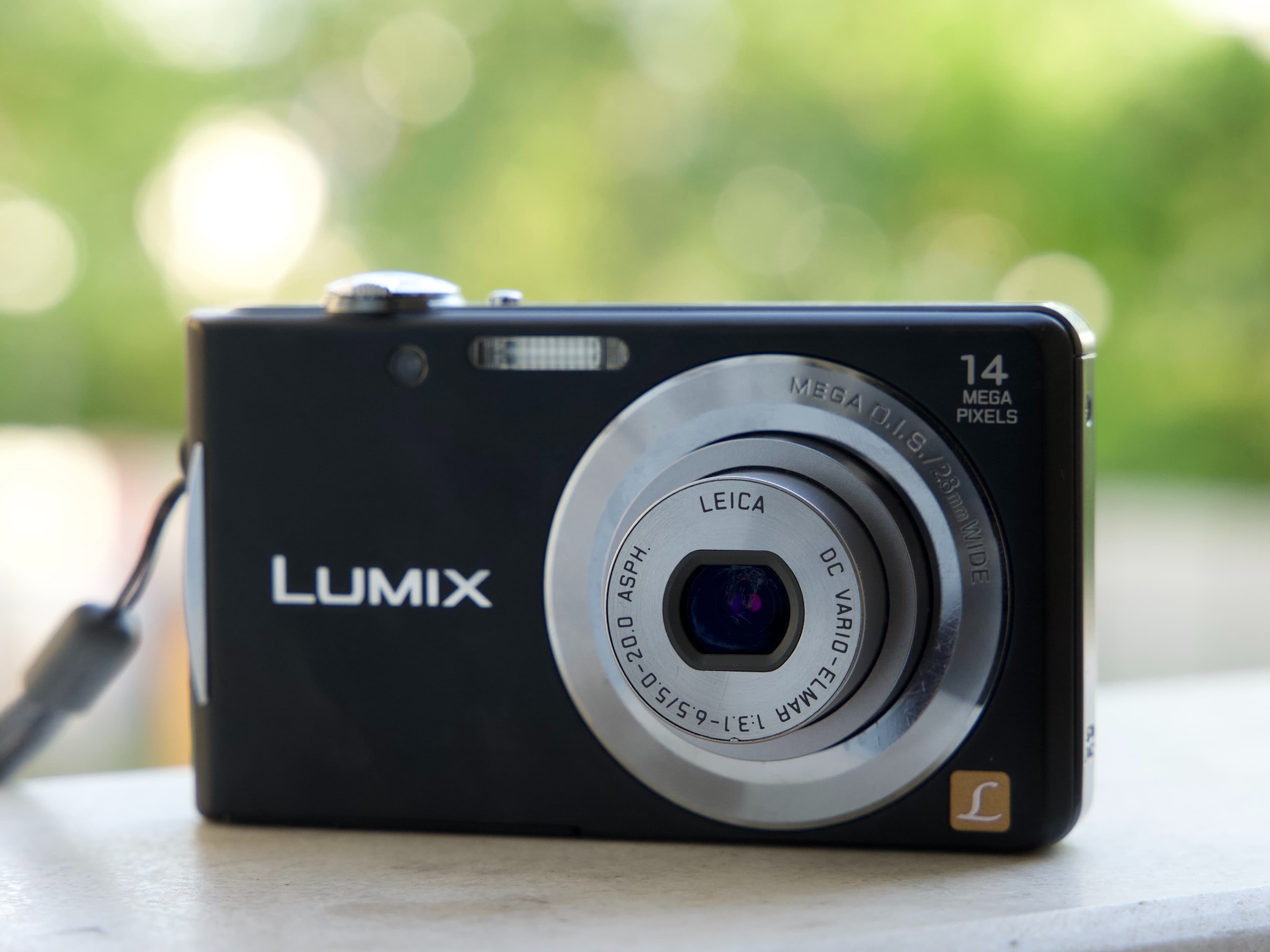
The word Leica on the front of a cheap compact makes people look twice, and the Panasonic Lumix DMC-FH2 wears it. The camera is Panasonic's; the lens, a LEICA DC VARIO-ELMAR, carries the Leica name through the long partnership between the two companies. What you actually get is a slim, simple 2011 compact with a wide-starting zoom and the CCD colour of its era.
Buy the FH2 if you want an everyday pocket camera with a genuinely wide lens, CCD rendering and HD video, for very little money. Skip it if you are buying it expecting Leica image quality, or if you need a long zoom or good low-light performance.
The Lens
The zoom is 4x, covering 28mm to 112mm equivalent. The 28mm starting point is the most useful thing about it. Many budget compacts of this period started at a tighter focal length; 28mm fits a whole room, a building or a group of friends into the frame without backing into a wall.
The 112mm long end is modest. It is a lens for portraits at a comfortable distance and for tidying up a composition, not for reaching across a street.
The Sensor and Everyday Features
Behind the lens is a 14.1-megapixel CCD sensor, producing files of 4320 by 3240 pixels — more resolution than a sensor this small can fully use, but plenty for cropping and printing. The colour has the density that draws people to CCD cameras.
The FH2 has built-in image stabilisation to counter hand shake, AF tracking to keep focus on a moving subject once you have locked onto it, and 720p HD video recording. The rear screen is 2.7 inches.
What the Leica Name Does and Does Not Mean
It means a lens designed to a standard both companies were willing to put their names on, and in daylight the FH2 renders scenes cleanly with good colour. It does not mean the camera behaves like a Leica. The sensor is small, the processing is that of a budget compact, and in dim light noise and smoothing arrive just as they do on any camera of this class.
Judge it as what it is: a well-made, pocketable everyday camera with a better-than-average wide end.
The Limits
Indoor shots without flash will be noisy and soft. The 4x zoom is short. The 2.7-inch screen is adequate for framing but not for checking sharpness, so zoom in on playback. And like every slim compact of this era, the retracting lens is the most fragile part of the camera.
Checking One Before You Buy
Extend and retract the lens several times. In a body this slim, grit from a pocket does real damage, and any grinding, hesitation or lens error message is reason to walk away.
Test the stabilisation. At 112mm, frame something with fine detail and half-press the shutter, then take a couple of shots holding the camera normally. Check them zoomed in on playback for blur.
Record a short 720p clip and play it back to confirm video and sound both work.
Look at the screen against a bright background for scratches and pressure marks, fire the flash several times in a row, and shoot a white wall at 28mm to look for dust on the sensor.
Ask to see the camera powered on for several minutes. A battery from around 2011 may hold very little charge, and it is better to budget for a replacement than to be surprised.
Stock changes often at Silver Cam, so check the shop for whether an FH2 is available right now. Every slim compact we list has its lens travel, flash, screen and battery checked before it goes on the site, and we repair the stuck lenses these cameras are prone to. We also buy old Lumix cameras you no longer use.