September 15, 2026
Panasonic Lumix LZ3: A Stabilised 6x Zoom on AA Batteries
The Panasonic Lumix LZ3 is a 2006 5MP CCD compact with a 6x zoom, optical stabilisation and AA power. What five megapixels still gives you, and what to check.
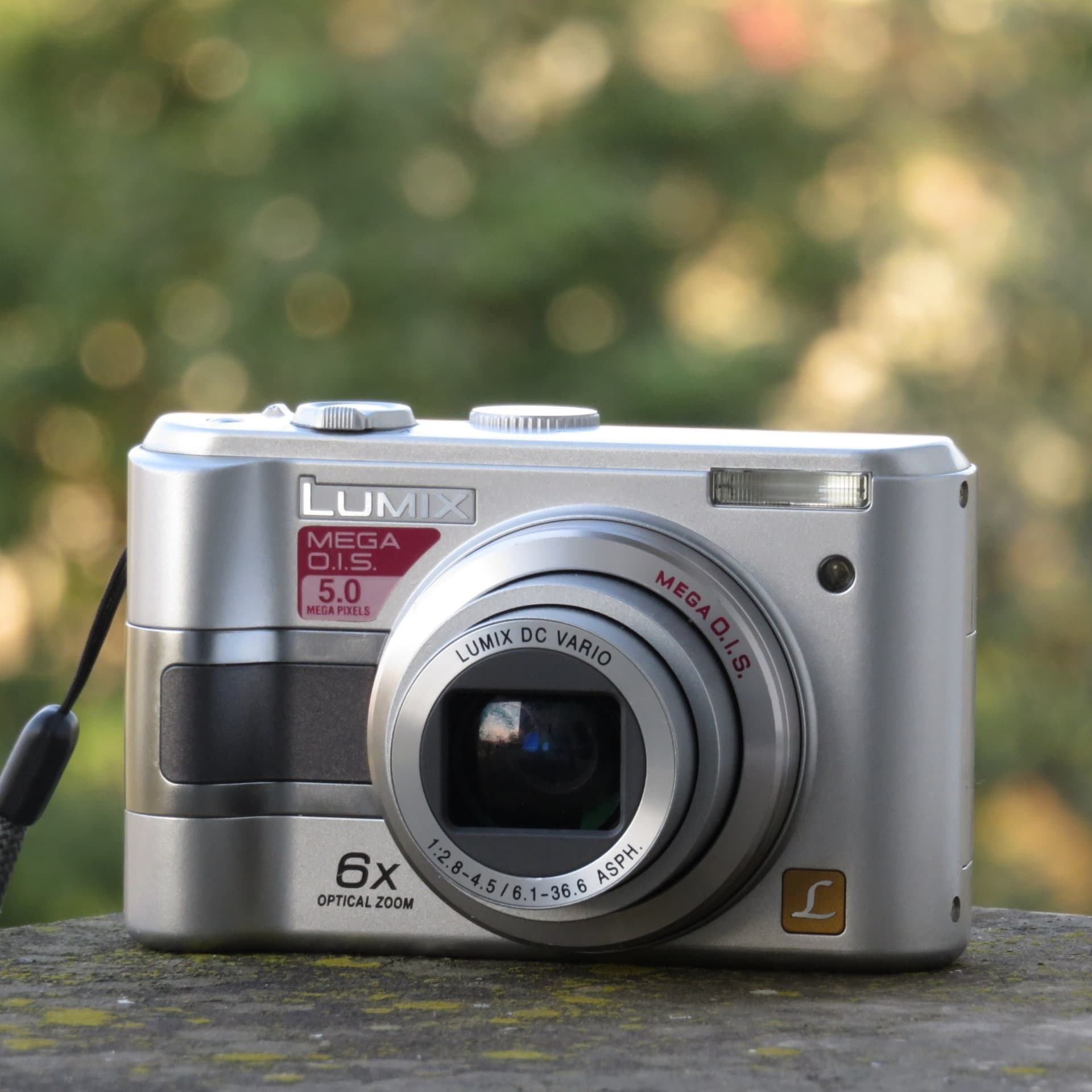
Five megapixels sounds like a number from another era, and it is. Panasonic announced the Lumix DMC-LZ3 at CES in January 2006. What makes it worth a look today is not the resolution but the combination it put in a cheap, simple body: a 6x zoom, a genuine optical image stabiliser, and two AA batteries.
Buy the LZ3 if you want the look of a mid-2000s CCD digicam with more zoom than most budget cameras of its time, and you like the idea of never being stranded by a dead proprietary battery. Skip it if you want wide-angle shots, a usable screen in bright sun, or anything approaching modern detail.
What the LZ3 Brings
A 5-megapixel CCD sensor, a 6x zoom covering 37mm to 222mm equivalent, Panasonic's MEGA O.I.S. optical image stabiliser, a 2-inch screen, and power from two AA cells.
The stabiliser is the detail to notice. Many cheap cameras of this period either had no stabilisation or offered a digital version that did little. Optical stabilisation physically moves an element in the lens to counter hand shake, and at 222mm that is the difference between a sharp picture and a blurred one.
What Five Megapixels Still Gives You
A 5-megapixel file is 2560 pixels across — more than a phone screen, a laptop screen or a social media post will ever display. When the LZ3 was reviewed, the reviewers found bright, pleasing colour, good resolution for the class, and only moderate lens distortion. Printed at normal sizes, or viewed on any screen people actually use, the files hold up.
The lower resolution is also part of the character. Early CCD compacts processed their images lightly, and the result has a density and a softness that later, higher-resolution cameras smoothed away.
The Honest Limits
The wide end is 37mm, which is tight. Groups, rooms and landscapes will push you backwards, and sometimes you will not have the space.
The 2-inch screen is very small by current standards. It is fine for framing, but you should not judge focus on it; zoom in on playback first, and expect it to wash out in strong sunlight.
And like every small CCD camera, the LZ3 is at its best in daylight. Push the sensitivity indoors and noise appears quickly, so use the flash or step outside.
Why AA Power Is Worth More Now Than in 2006
In 2006 AA batteries were the budget option. Twenty years on they are the reason this camera still works while many rivals sit useless with dead, unobtainable battery packs. Two rechargeable NiMH cells will run the LZ3 for a day, and alkaline cells from any shop will get you through an emergency.
The Checks to Do in Person
Open the battery compartment and look for white or green corrosion on the contacts. A camera this old has almost certainly spent years in a drawer, and leaking batteries are the most common thing that kills it.
Run the zoom from 37mm to 222mm and back several times, listening for grinding and watching for a lens error.
Test the stabiliser at full zoom. Frame something distant, half-press the shutter and watch whether the image steadies. It should, clearly.
Check the small screen for dead pixels and scratches, and fire the flash a few times in a row.
Bring a small memory card. Cameras from early 2006 often predate the SDHC standard and may not read larger cards, so a 2GB SD card is the safe choice.
Stock changes often at Silver Cam, so check the shop for whether an LZ3 is available right now. Every AA-powered compact we list has its contacts, zoom, stabiliser and flash checked before it goes on the site, and we clean corroded contacts and repair stuck lenses on cameras like this one. We also buy old Lumix cameras you no longer use.