September 15, 2026
Samsung S860: Why an 8MP CCD Camera Still Appeals
The Samsung S860 is a 2008 8.1MP CCD compact that runs on AA batteries. Why its soft, lightly processed files appeal now, its real limits, and what to check.
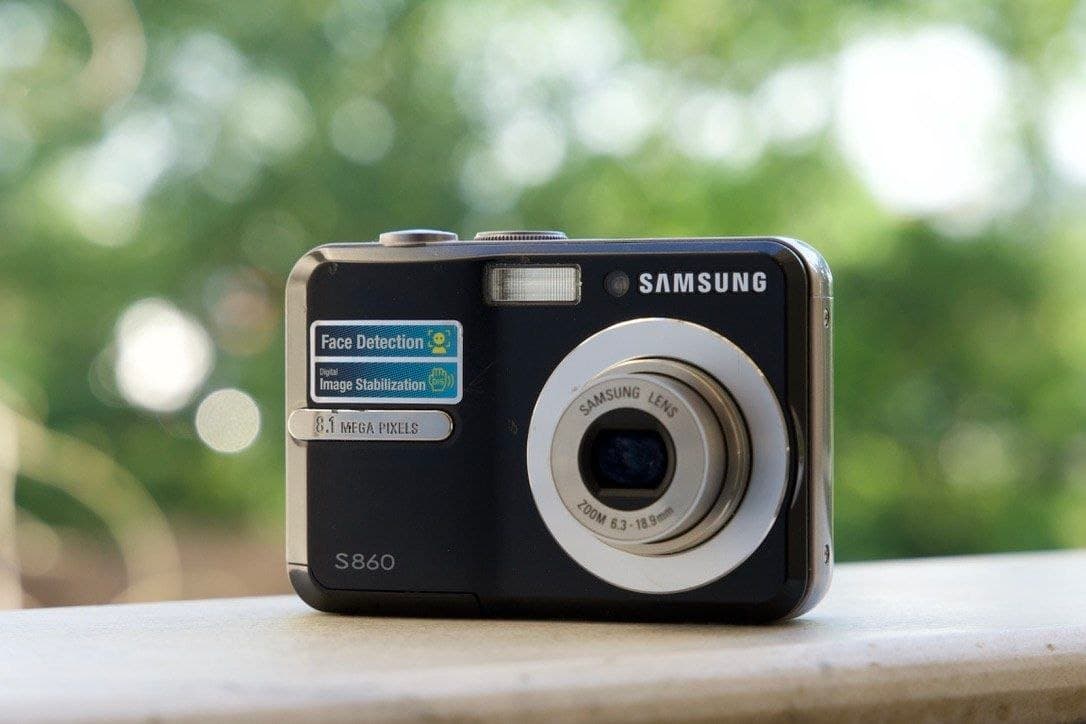
The Samsung S860 went on sale in January 2008 at 179 dollars, in black, silver, pink and blue, as an entry-level model. It was never meant to be anything special. Nearly two decades later it has become a small favourite for exactly the reason it was cheap: it does very little to its pictures.
If you want the soft, lightly processed look of a late-2000s digicam in a camera that runs on AA batteries, the S860 is a good way to get it for very little money. If you want sharpness, low-light performance or a long zoom, look elsewhere.
The Specification, Honestly
An 8.1-megapixel CCD sensor behind a 3x zoom covering 38mm to 105mm equivalent. A 2.4-inch, 230,000-dot screen. Sensitivity from ISO 80 to 1000. Face detection for focus and exposure, eleven scene modes, and a movie mode with sound. Pictures go on SD or SDHC cards, with a small amount of built-in memory as a fallback.
Two details in that list deserve attention. The lens starts at 38mm, which is noticeably tight — you will step back for group shots and struggle in small rooms. And the stabilisation Samsung called DIS is digital, not optical: it is done in processing, without moving any glass, so it does far less than the name suggests.
Why the Files Look the Way They Do
Cameras of this generation generally applied gentler sharpening and noise reduction than the compacts that followed, and they paired it with CCD sensors that render colour densely. From the S860 the result is a slightly soft file with noise that sits in the image like grain rather than being scrubbed into smears.
That is the look people now try to recreate with filters. On the S860 it simply comes out of the camera, and the modest 8-megapixel resolution is part of it rather than a limitation to apologise for. For phone screens and small prints it is more than enough.
The Trade-Offs
This is a daylight camera. With a top sensitivity of ISO 1000 and no optical stabiliser, indoor photos without flash will blur or turn noisy, so use the flash or go outside. The screen is small and coarse by modern standards, so zoom in on playback before trusting focus. And the 3x zoom is short: this is a camera for what is in front of you, not what is across the street.
Why AA Power Still Matters
The S860 runs on two AA batteries. That means no hunt for a discontinued lithium pack, no dead original battery to replace, and power available anywhere. Rechargeable NiMH cells are the sensible everyday choice; alkalines work in a pinch.
The Checks That Matter on This Camera
Open the battery door and look at the contacts for white or green corrosion from leaked cells — the most common way AA cameras of this age die. Light corrosion cleans; deep pitting does not.
Make sure the battery door latches firmly. On a budget plastic body it is the part that wears out first.
Run the zoom in and out several times. On a camera this inexpensive a damaged lens is rarely worth repairing, so any grinding or Lens Error message is reason enough to walk away.
Check the screen for scratches and pressure marks, fire the flash repeatedly to confirm it recharges, and photograph a plain wall to look for dust on the sensor.
Put in an SD card and confirm the camera records to it rather than silently falling back to internal memory — take a few shots, then check they are actually on the card.
Stock changes often at Silver Cam, so check the shop for whether an S860 is available right now. Every AA-powered compact we list has its contacts, battery door, zoom and flash checked before it goes on the site, and we clean corroded contacts on cameras like this one. We also buy old digicams you no longer use.