September 15, 2026
Sony HX10V: The GPS Travel Camera Worth Buying Used
The Sony Cyber-shot HX10V puts an 18MP Exmor R sensor, a 16x zoom and built-in GPS in a pocket camera. Why it suits travel, its limits and what to check.
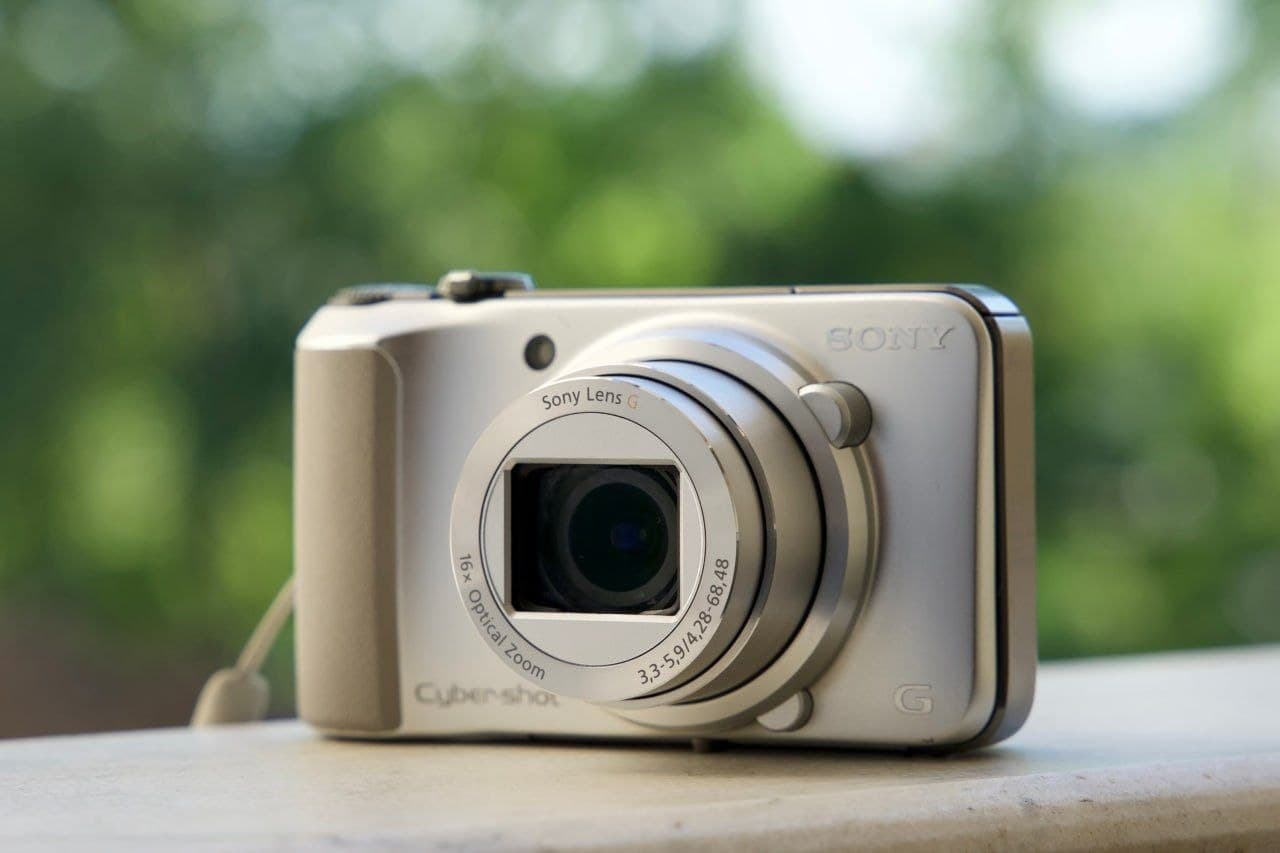
Most travel photos lose their most useful piece of information the moment they are taken: where they were taken. The Sony Cyber-shot HX10V, introduced in February 2012, records it with every frame. It has GPS and a compass built in, alongside an 18.2-megapixel sensor and a 16x zoom, in a body small enough for a jacket pocket.
If you want one camera for a trip that remembers where you went as well as what you saw, the HX10V is one of the most complete pocket options of its generation. If you need raw files or want to shoot fast action, it is not the right tool.
GPS and Compass, and Why They Matter
With GPS switched on, the HX10V tags photos with their location, and the compass adds the direction the camera was facing. Photo software that reads location data can then place every picture on a map. Months after a journey, that turns a folder of anonymous files into a route you can actually retrace — which town, which viewpoint, which side of the valley.
Be realistic about GPS of this era. The receiver needs a clear view of the sky, can take several minutes to find its position after being switched on, and does not work indoors. Leaving it on also uses battery.
The Sensor, Lens and Screen
The sensor is an 18.2-megapixel Exmor R, Sony's backside-illuminated design, and one of the stronger small sensors of its time for low-light work. The lens covers 24mm to 384mm equivalent, and the wide end matters as much as the long one: 24mm fits in architecture, interiors and street scenes that a 28mm lens crops off.
The rear screen is the detail reviewers kept coming back to — 3 inches and 921,000 dots, bright, with wide viewing angles. On a camera with no viewfinder, a screen you can read in sunlight is not a luxury.
Video is full HD at 60i or 50i with stereo sound, and the camera shoots sweep panoramas and 3D stills.
What to Know Before You Rely on It
Several of the HX10V's cleverer modes work by shooting multiple frames and combining them, which takes processing time, so the camera can feel slow between shots in those modes. There are no raw files; what the JPEG engine produces is what you keep.
Battery life is rated at about 340 shots on the NP-BG1 battery, and GPS use reduces that. For a full day of travel, carry a second battery.
It is also a 1/2.3-inch sensor, like every pocket travel zoom. In daylight it produces sharp, bright files; in dim interiors, noise and smoothing become visible, especially at the long end of the zoom.
Checking a Used HX10V
Take it outside and switch the GPS on. Give it several minutes with a clear view of the sky and confirm it finds a position. This is the feature you are paying for, so do not skip the test.
Extend the zoom fully and retract it several times, watching for hesitation, grinding or a lens error. A 16x barrel is long for a camera this slim.
Inspect the 921,000-dot screen closely for scratches, dead pixels and pressure marks — it is the camera's best feature and expensive to replace.
At 384mm, half-press the shutter on a distant subject and watch the stabiliser settle the frame.
Check battery health by leaving the camera on for several minutes rather than taking a single shot, and fire the flash a few times in a row to confirm it recharges.
Stock changes often at Silver Cam, so check the shop for whether an HX10V is available right now. Every travel zoom we list is checked at both ends of the zoom, with stabiliser, screen and battery tested before it goes on the site, and we repair stuck zoom lenses on compacts like this one. We also buy travel cameras you no longer use.