September 5, 2026
Sony WX1 vs W170: The Year Sony Left CCD
The Sony W170 is a 2008 CCD compact. The WX1 is the 2009 camera that replaced CCD with Exmor R. Which Cyber-shot you want depends on what you shoot in the dark.
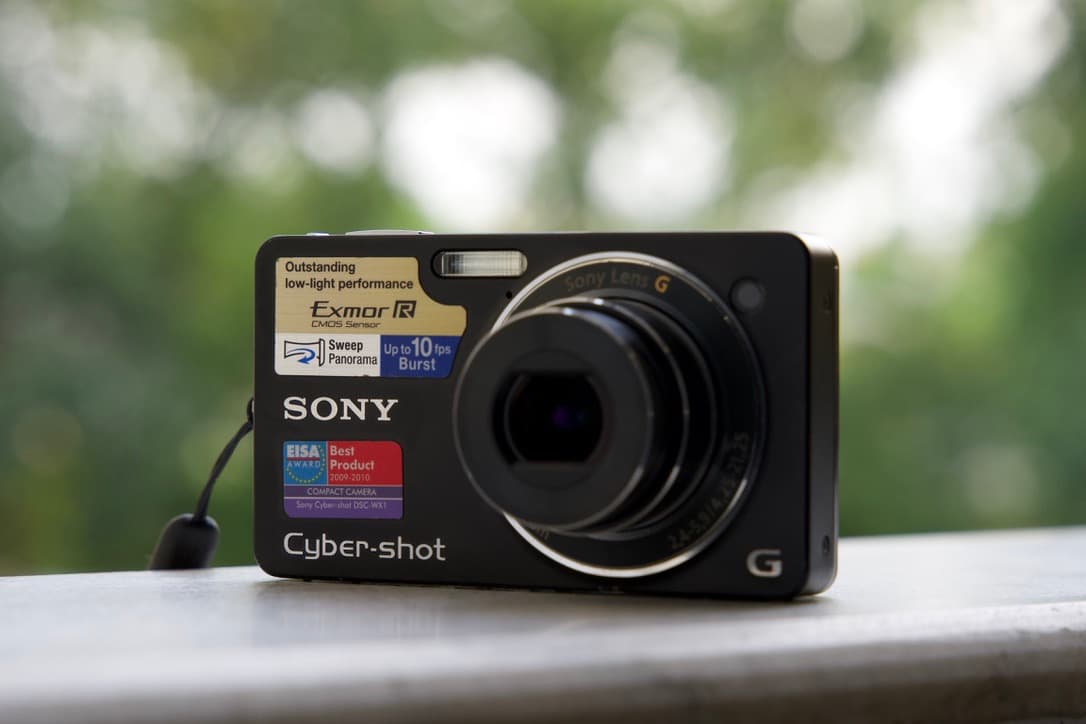
These two Sony compacts were released a year apart and both have ten megapixels, a 5x zoom and a 2.7-inch screen. On paper they look like the same camera. They are not, and the difference is the most important sensor change in compact camera history.
The W170, from 2008, uses a Super HAD CCD. The WX1, from 2009, was one of the first two Cyber-shots ever built around Sony's Exmor R backside-illuminated CMOS sensor — a design Sony claimed roughly doubled sensitivity over a conventional sensor. If you shoot in daylight, buy the W170 and enjoy the CCD colour. If you shoot indoors, at night, or at concerts and restaurants, buy the WX1. That is the whole decision.
The W170: Classic Sony CCD
A 10.1-megapixel Super HAD CCD behind a 5x Carl Zeiss Vario-Tessar lens covering 28mm to 140mm, in a metal body, with Super SteadyShot optical stabilisation. This is the specification sheet of a very good 2008 compact, and it is exactly what people looking for the digicam aesthetic want.
The Zeiss lens matters here. Sony's partnership with Carl Zeiss on these compacts was not purely branding — the rendering has a particular contrast and a slightly cool, crisp character that is a large part of why Cyber-shots of this era look the way they do. Combined with CCD colour, the W170 produces the dense, slightly saturated files that no phone will reproduce.
Its limitation is the same one every CCD compact has. Push past ISO 400 and noise arrives quickly, and it is not the pleasant kind. This is a daylight camera.
The WX1: The First of the New Generation
The WX1 was announced in August 2009 alongside the TX1 as the debut of Exmor R. Backside illumination moves the wiring behind the photodiodes so more light reaches the sensor, and the jump in low-light performance was not subtle — it is the reason every compact and every phone camera built since uses the same approach.
Sony paired it with something equally important: a 5x G lens starting at 24mm with an f/2.4 maximum aperture. That is a genuinely fast lens for a compact, and it is wider than the W170's 28mm start, which matters for interiors and street shooting. A brighter lens and a more sensitive sensor together is why the WX1 is usable in situations where the W170 simply is not.
It shoots 720p video, runs from ISO 160 to 3200, and has the sweep panorama and handheld low-light modes Sony built to show off the new sensor's speed.
So Which One?
If you want the look — the reason people are buying old Sony compacts at all — the W170 is the more characterful camera and the CCD is the point.
If you want a camera that works everywhere, the WX1 is meaningfully more capable and remains the more useful of the two in 2026. It is also a small piece of camera history, being among the first cameras with the sensor design that everything now uses.
There is no wrong answer here. There is only whether your photographs happen in daylight.
What to Check When Buying Either Used
Both are slim compacts with retracting zoom lenses, and the lens is what fails. Extend and retract it six or seven times and watch for grinding, hesitation, or a Lens Error message. Slim bodies leave very little room in the barrel, so grit from a pocket does more damage here than in a larger camera.
Both take Sony's proprietary batteries, and this is the check most people skip. Original cells from 2008 and 2009 often hold almost nothing. Ask to see the camera powered on for several minutes rather than for one shot, and budget for a replacement battery.
Both also use Sony's Memory Stick format alongside SD on some variants. Confirm exactly which cards the body in front of you accepts, and bring one to test — do not assume a modern SD card will work.
Check the screen against a bright background for pressure marks and dead pixels. Shoot a plain white wall at the widest zoom setting and look for dust specks on the sensor.
Fire the flash five times in a row and confirm it recharges each time rather than fading. On the W170, look closely at the metal body for dents around the lens barrel — these compacts were popular and many were dropped, and a dent near the barrel is what causes a lens to jam later.
Finally, on the WX1, shoot a few frames at ISO 1600 and look at them on a computer rather than the camera screen. The whole reason to buy this body is high-ISO performance, so verify you are getting it.
Both cameras are in stock at Silver Cam, tested and working. We check zoom travel, flash recharge, battery health and card compatibility on every compact before listing, and we repair the stuck zoom lenses these slim bodies are prone to. We also buy old Cyber-shots you no longer use.