September 5, 2026
Waterproof Camera Guide: Lumix FT2 for Water
A used waterproof camera costs less than a phone case, but the seals age. Here is what the Lumix FT2 does, and how to check a rugged camera before you get it wet.
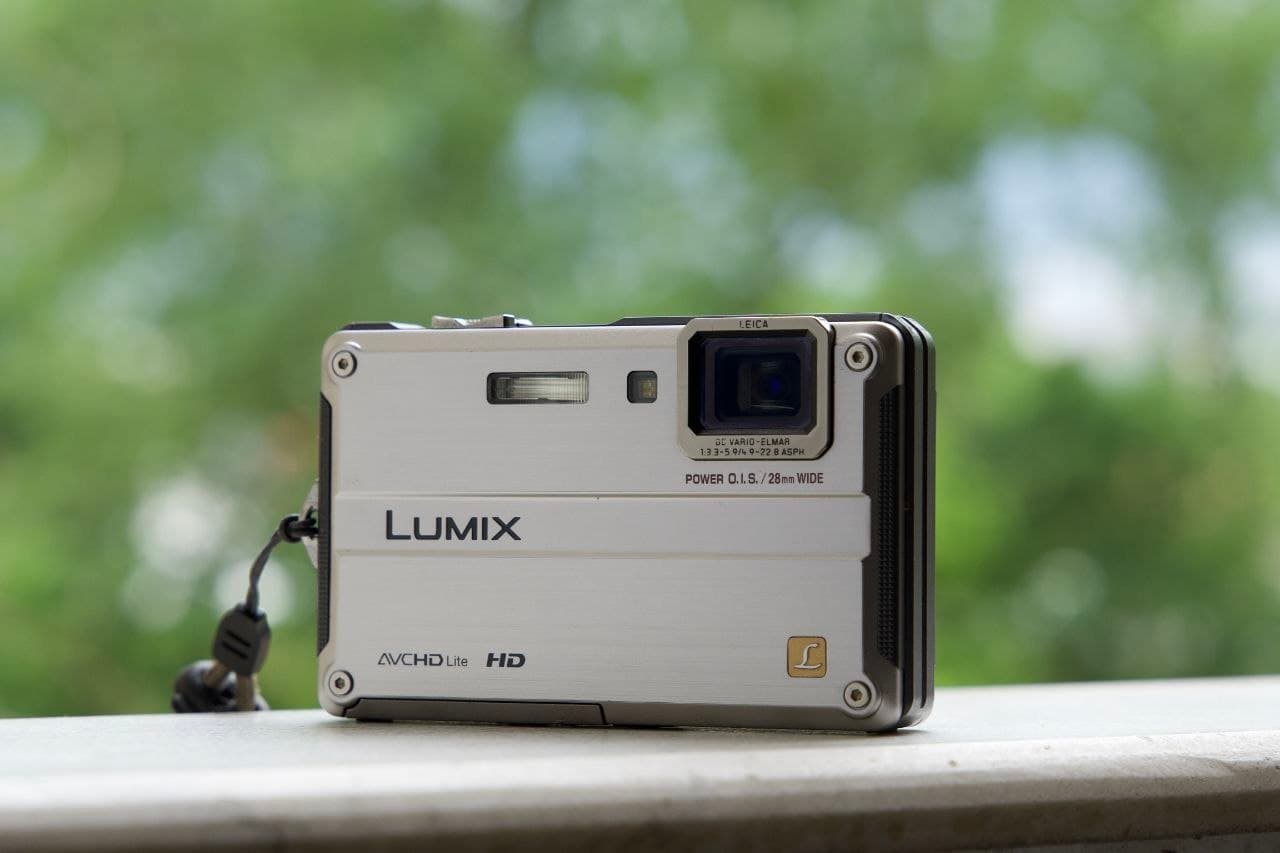
There is one situation where a fifteen-year-old compact still beats the phone in your pocket outright, and that is anywhere near water. Nobody hands a phone to a friend at the edge of a pool. A rugged camera you paid very little for changes how you behave — you stop protecting it and start using it.
The Panasonic Lumix DMC-FT2, sold as the TS2 in some markets, is one of the better cameras of that type. It is waterproof to 10 metres, shockproof from a 2-metre drop, dustproof, and freezeproof to minus 10 degrees. It carries the MIL-STD 810F Method 516.5 rating for drop resistance, which is a military test standard rather than a marketing claim.
But a used rugged camera comes with one specific risk that no other used camera has, and it is worth understanding before anything else.
The Seals Are the Whole Story
Waterproofing on these cameras comes from rubber gaskets around the battery door and the lens assembly. Rubber does not last forever. It hardens, shrinks and cracks with age, heat and UV, and a fifteen-year-old gasket is not the gasket the camera left the factory with.
This means the honest position on any used waterproof camera is that the depth rating is no longer guaranteed. It may well be fine. It may leak at a metre. You cannot tell by looking, and water damage is instant and total — a flooded camera is not repaired, it is thrown away.
So treat the rating as a description of what the camera was designed for, not a promise about what it will survive today. Use it in the rain, at the beach, in the snow, by the pool, in the dust. If you intend to dive with it, have the seals replaced first, or buy something new.
That is not a reason to avoid these cameras. It is a reason to buy a cheap one rather than an expensive one, and to be realistic about depth.
What the FT2 Actually Is
Underneath the armour it is a competent compact: a 14.1-megapixel sensor, a 4.6x zoom covering 28mm to 128mm equivalent, and Power O.I.S. optical stabilisation. The lens does not extend from the body — it is sealed internally, which is what makes the waterproofing possible and, incidentally, what makes the camera immune to the retracting-lens failure that kills most compacts of this era.
Panasonic's Venus Engine HD II processor drives a Sonic Speed autofocus system with a claimed shutter lag of 0.005 seconds. In practice it means the camera fires when you press it, which matters more with kids and water than any specification on the sensor. It records AVCHD Lite HD video and takes SDXC cards, so a large modern memory card works fine.
The reason it is worth recommending over other rugged cameras of its generation is image quality. Tough cameras usually trade picture quality for durability. Reviewers at the time found the FT2 held onto strong colour accuracy, low noise and decent sharpness — it is a real camera that happens to be waterproof, not a waterproof box that happens to take pictures.
Who This Is For
Parents at a pool. Anyone going to the Caspian for a week. Skiing and snow, where cold kills phone batteries and moisture kills everything else. Hiking and dusty travel. Anyone who has already destroyed one phone by taking it somewhere it should not have gone.
It is also, quietly, an excellent camera to hand to a child. There is nothing to break, nothing to protect, and no reason to say be careful.
What to Check When Buying a Used Rugged Camera
The checks are different from any other compact, so do these specifically.
Open the battery and card door and look closely at the rubber gasket running around it. It should be soft, evenly seated in its channel, and free of cracks, flat spots or grit. A gasket that looks glazed, hard or pinched is the warning sign. Check the door latch too — most rugged cameras use a double lock, and both stages must engage firmly.
Look at the flat glass panel over the lens for scratches. On a sealed-lens camera this panel is the front element as far as your pictures are concerned, and scratches show up as flare and softness in every bright scene.
Inspect the seams of the body for gaps, and the screws for damage from someone having opened it. A rugged camera that has been apart has almost certainly lost its seal integrity.
Check inside the battery compartment for water staining — a chalky white residue or rust-coloured marks on the contacts means it has been flooded before.
Then do the normal checks: fire the flash several times in a row, run the zoom internally through its full range listening for grinding, shoot a plain white wall and look for dust inside the sealed lens assembly, and check the screen for pressure marks.
After you buy, before any serious water use, close the doors and hold the camera in a sink of shallow water for a minute and watch for bubbles trailing from a seam. It is a crude test, but a stream of bubbles tells you the answer before a real swim does.
Our FT2 is in stock, tested and working. We check gasket condition, lens panel clarity and battery compartment staining on every rugged camera before listing, and we say plainly when a body should be treated as splash-proof rather than dive-ready. We also buy waterproof cameras you no longer use.